How to Set Boundaries at Work Without Feeling Guilty
You can be a good employee and still have a life outside your inbox. Here's how to actually make that true.
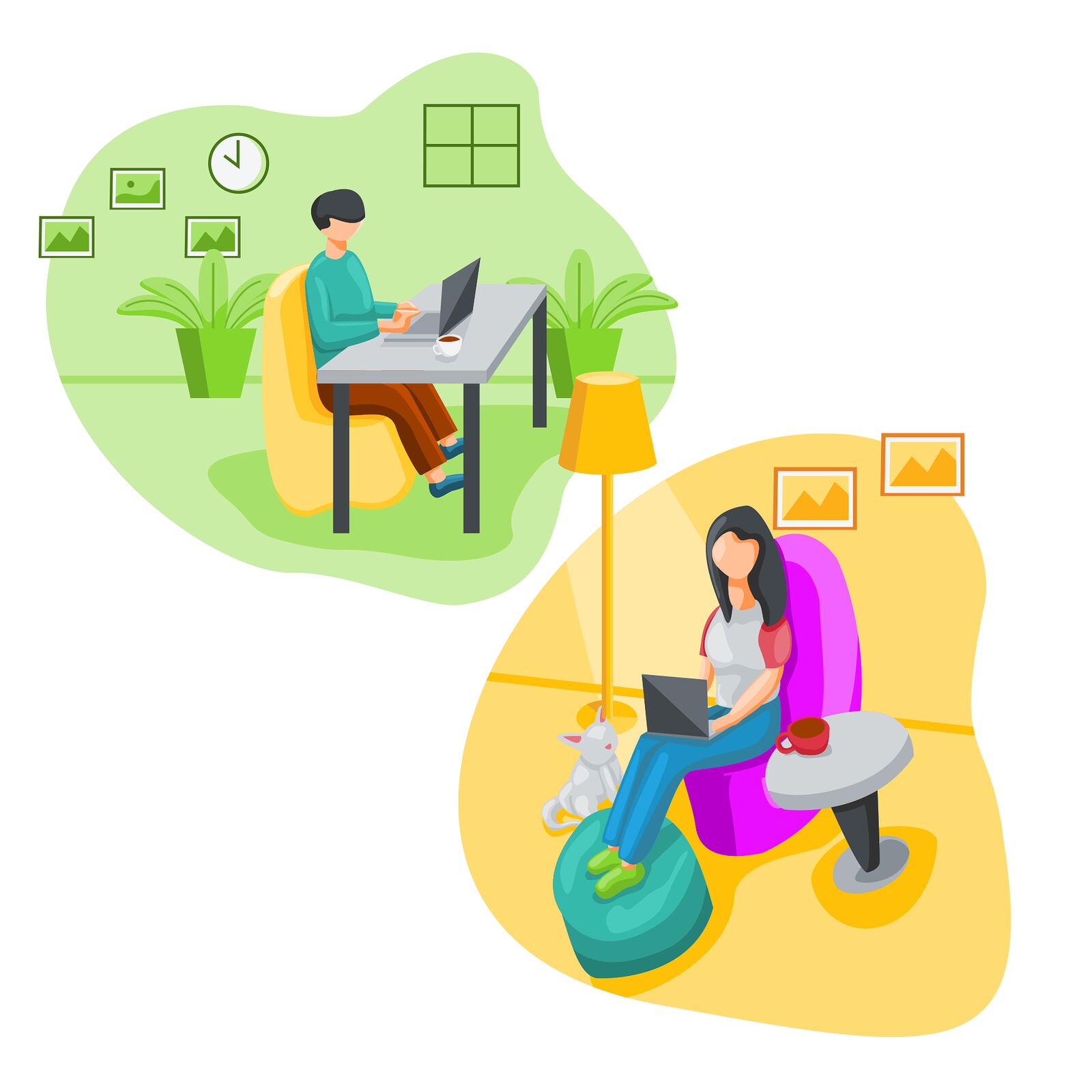
It's 8:47pm. You told yourself you'd stop working two hours ago. Your phone buzzes with a message from your manager — nothing urgent, just a question that could easily wait until morning — and before you've even consciously decided to, your thumb is already opening the app to reply. Not because you want to. Because some quiet, well-worn part of you is afraid of what it would mean if you didn't.
If this is familiar, you are living inside one of the most common, least discussed sources of chronic work stress: the absence of any real boundary between your job and the rest of your life.
And here is the honest, slightly uncomfortable truth at the centre of it — most people don't lack boundaries because they don't know they need them. They lack boundaries because somewhere along the way, they learned that having them felt selfish, risky, or simply impossible in their specific job. This article is about untangling that, and building boundaries that actually hold.
This isn't a small, cosmetic fix either. The absence of clear boundaries is one of the quietest, most under-discussed contributors to long-term mental health struggles at work — not because any single late-night reply does real damage, but because thousands of them, repeated without pause for years, slowly convince your nervous system that rest was never actually allowed. Fixing that takes more than good intentions. It takes specific, repeatable practice, which is exactly what the rest of this article walks through.
"No is a complete sentence. It does not require a three-paragraph justification to be valid."
Why Boundaries Feel So Much Harder at Work Than Anywhere Else
Setting a boundary with a friend or a family member is hard enough. Setting one with your employer — the entity that pays your rent, decides your promotions, and holds real power over your future — can feel like an entirely different category of risk. This isn't irrational. There's a genuine power imbalance built into most employment relationships, and that imbalance is exactly why boundary-setting at work requires a different, more deliberate approach than it does in your personal life.
Add to that the specific cultural weight many people carry around work ethic — the belief that saying no, leaving on time, or declining an unpaid extra task makes you look lazy, uncommitted, or replaceable — and you get a workforce full of capable, exhausted people who genuinely believe that having limits is a character flaw rather than a basic requirement for sustainable performance.
The particular pressure in Nigerian and African workplace culture
In many Nigerian workplaces specifically, this dynamic carries extra weight. A strong cultural emphasis on respect for hierarchy, gratitude for employment in a difficult job market, and a genuine sense of communal obligation can make boundary-setting feel almost disrespectful — as though asking for limits is ungrateful given how hard the opportunity was to secure in the first place.
This is a real, understandable pressure, not a personal weakness. But it's worth separating gratitude for having a job from the belief that having a job means you owe unlimited access to your time. Those are two different things, and confusing them is exactly what leads capable, dedicated people into quiet, prolonged burnout.
What "No Boundaries" Actually Costs You
Before getting into how to set boundaries, it's worth being honest about what the absence of them is actually doing to you, because the cost is often invisible until it's severe.
Signs your work boundaries have quietly disappeared:
- You check email or messages first thing in the morning and last thing at night, without exception
- You feel a spike of anxiety when your phone buzzes outside work hours, before you even know what it says
- You say yes to requests instantly, then privately resent having agreed almost immediately afterward
- You cannot remember the last time you took a full lunch break away from your desk
- Your personal relationships have started to notice — and mention — how consumed you seem by work
- You feel guilty resting, as though relaxation needs to be earned through visible exhaustion first
This pattern connects directly to the exact conditions that lead to full workplace burnout — porous boundaries are rarely the final stage of burnout; they're usually the quiet, early one that goes unaddressed for months or years before anything visibly breaks.

Watch: Your 3-Step Guide to Setting Better Boundaries at Work — Nedra Glover Tawwab, TED
Where the Guilt Actually Comes From
Understanding the guilt itself is often more useful than trying to push through it with willpower alone. For many people, that guilt was installed long before their current job — in families where love felt conditional on achievement, in cultures that equate self-sacrifice with virtue, in earlier jobs where boundaries genuinely were punished. If you feel guilty setting a limit at work, it rarely means the limit is unreasonable. It usually means you're doing something unfamiliar, and unfamiliar things reliably feel wrong before they feel normal.
It also helps to separate two things that get tangled together: being a good colleague, and being endlessly available. You can be responsive, competent, and genuinely committed to your work while still having clear edges around your time. These are not opposites. In fact, people with sustainable boundaries very often outperform those without them over the long run, simply because they aren't operating from a place of chronic depletion.
This guilt also shows up in a specific, sneaky way for people already prone to feeling like they haven't truly earned their position: the fear that setting any limit at all will be the thing that finally reveals you as replaceable. It's worth naming that fear directly, because once it's named, it becomes much easier to see that a reasonable boundary was never actually the risk — the risk was always the slow, invisible cost of having none.
There's also a generational layer worth naming honestly. Many people watched a parent or mentor build their entire identity around being endlessly available for work, and absorbed the unspoken lesson that this was simply what dedication looked like. Unlearning that isn't a single decision — it's a slow, repeated practice of noticing the old script running, and choosing a different response anyway, even when the old script still feels more "correct" in the moment.
The Nervous System Side of Boundaries
There's a physiological piece to this that rarely gets mentioned alongside the practical advice. Every time you say yes when you mean no, your body registers it as a small stress event — even if your face stays composed and your tone stays pleasant. Over months and years, this accumulates. A body that never gets a clear, honoured "off" signal stays in a low-grade state of alert far more of the time than it was ever designed to.
This is part of why boundary-setting so often feels disproportionately hard the first few times — it isn't just a social or communication skill you're building, it's also retraining a nervous system that has learned, correctly based on past experience, that your limits don't get respected. The good news is that this retraining genuinely works with repetition. Each time you hold a boundary and the world doesn't end, your body updates its prediction a little, and the next attempt gets measurably easier.
Practical Boundaries, With Real Scripts You Can Actually Use
Boundaries fail most often not because people don't believe in them, but because they don't have the actual words ready in the moment. Here are concrete starting points for some of the most common situations.
Protecting your time after hours
Try saying:
"I'm signing off for the evening — I'll pick this up first thing tomorrow morning."
You don't need to justify it, apologise for it, or explain your evening plans. State it plainly and follow through consistently — the consistency is what actually trains people around you, not the wording.
Declining extra work you don't have capacity for
Try saying:
"I want to give this the attention it deserves, and I don't have the bandwidth to do that properly right now alongside my current workload. Can we look at what could move to make room for it?"
This reframes the "no" as a commitment to quality rather than a refusal, which is often easier for both you and the person asking to hear.
Protecting your lunch break
Try saying:
"I'm stepping away for lunch — I'll be back online at [time]."
Treat this the same way you would a scheduled meeting. A break you protect on your calendar is far more likely to survive the day than one you were simply hoping to find time for.
Responding to last-minute urgent requests
Try saying:
"I can take this on, but something else will need to move — can we agree what gets deprioritised?"
This makes the real trade-off visible instead of silently absorbing the extra work into your own unpaid overtime, where it becomes invisible to everyone but you.
Managing a manager who doesn't naturally respect limits
Try saying:
"I do my best work when I have clear, focused hours — I want to make sure I'm delivering quality, sustainably, not just quickly."
Framing boundaries around the quality and sustainability of your output — rather than purely around your personal wellbeing — sometimes lands more effectively with managers focused primarily on results, even though your wellbeing is the real underlying reason.
Not All Boundaries Are the Same Size
One thing that trips people up is treating every boundary as equally high-stakes, which makes the whole process feel exhausting before it even starts. It helps to think in terms of two different categories.
Hard boundaries — non-negotiable
These protect something essential: your sleep, a specific evening you've committed to family, your mental health during a genuinely difficult period. These deserve to be stated clearly and held firmly, even under pressure, because the cost of breaking them is real and personal.
Soft boundaries — genuine preferences
These are things you'd prefer but can flex on occasionally without real harm — a slight preference for morning meetings, a general habit of not working weekends. These are worth communicating too, but they don't need the same firmness, and treating every preference like a hard boundary can make you seem rigid rather than clear.
Knowing which category a given boundary falls into makes the whole conversation easier, because you'll know in advance how much you're actually willing to hold your ground on, rather than discovering it in the middle of an uncomfortable exchange.
Boundaries can be renegotiated as circumstances change
A boundary you set today isn't a permanent contract. A demanding season at work, a personal emergency, a temporary project deadline — these can all be legitimate reasons to flex a boundary for a defined period, as long as it's a conscious choice rather than a silent, indefinite slide back into the old pattern. The key difference is intention: choosing to work a hard weekend for a genuine, time-limited reason is not the same as never having decided to protect your weekends in the first place.
What to Do When a Boundary Isn't Respected
Setting a boundary once is easy compared to what happens next: watching how the other person responds to it. This is genuinely useful information. A reasonable colleague or manager might push back mildly, but will generally adjust once the boundary is clear and repeated. Someone who consistently ignores, mocks, or punishes a clearly stated, reasonable boundary is showing you something important about the environment you're in — a pattern worth taking seriously rather than assuming it's simply a communication problem you haven't solved correctly yet.
If pushing back on unreasonable demands consistently triggers retaliation, exclusion, or punishment, that is not a boundary-setting skill issue. That is a workplace culture problem, and it deserves to be named as one, whether that means raising it formally, seeking support from HR where genuinely safe to do so, or beginning to look elsewhere.
Remote Work Makes This Harder, Not Easier
Working from home was supposed to give people more control over their time. For many, it's done the opposite. Without a commute to mark the start and end of the day, without colleagues physically leaving the building as a visual cue, the workday has quietly expanded to fill every available hour. The laptop is always three feet away. The temptation to "just quickly check" never really goes away.
If you work remotely, the boundaries above need a physical anchor to actually hold. Something as simple as closing your laptop and putting it in a different room at a consistent time each evening gives your brain a concrete signal that the workday has ended — a signal that used to come for free from the act of physically leaving an office, and that remote work quietly took away without replacing it with anything.
A useful trick for hybrid or remote workers is building a small, deliberate "commute" of your own — a short walk, changing clothes, even just stepping outside for five minutes at the start and end of the day. It sounds almost too simple to matter, but the brain responds strongly to physical, repeated cues, and manufacturing one yourself can recover much of what an actual commute used to provide for free.
Boundaries at Home Matter Too
Work boundaries aren't only about what happens between 9 and 5. They're also about what you allow work to occupy in the space that's supposed to be yours — your evenings, your weekends, your home. Creating an actual physical and mental separation, like a home environment that genuinely feels calm rather than like an extension of the office, reinforces the boundary from the other direction: not just declining extra tasks, but protecting the space where recovery is actually supposed to happen.
Quick-start toolkit:
- Pick one boundary to start with — not five at once — and hold it consistently for two weeks
- Use plain, short language: "I'm offline until tomorrow" needs no further explanation
- Notice guilt as a normal, expected side effect of doing something unfamiliar — not a sign you're doing it wrong
- Watch how others respond to a clearly stated boundary — it tells you something real about your environment
- Protect your physical space at home as part of the same boundary, not a separate issue
A Boundary Is Not a Wall. It's a Door You Get to Control.
You are allowed to be fully committed to your work and still have a life that exists outside of it. Those two things were never actually in competition — it just took the right words, and enough repetition, to prove it.
Explore Work & Burnout →