Breaking the Cycle: Understanding and Healing Generational Trauma
The pain our parents couldn't process doesn't disappear — it gets handed down. But understanding how it works, and how to break it, is the first step to ending it in your family line.
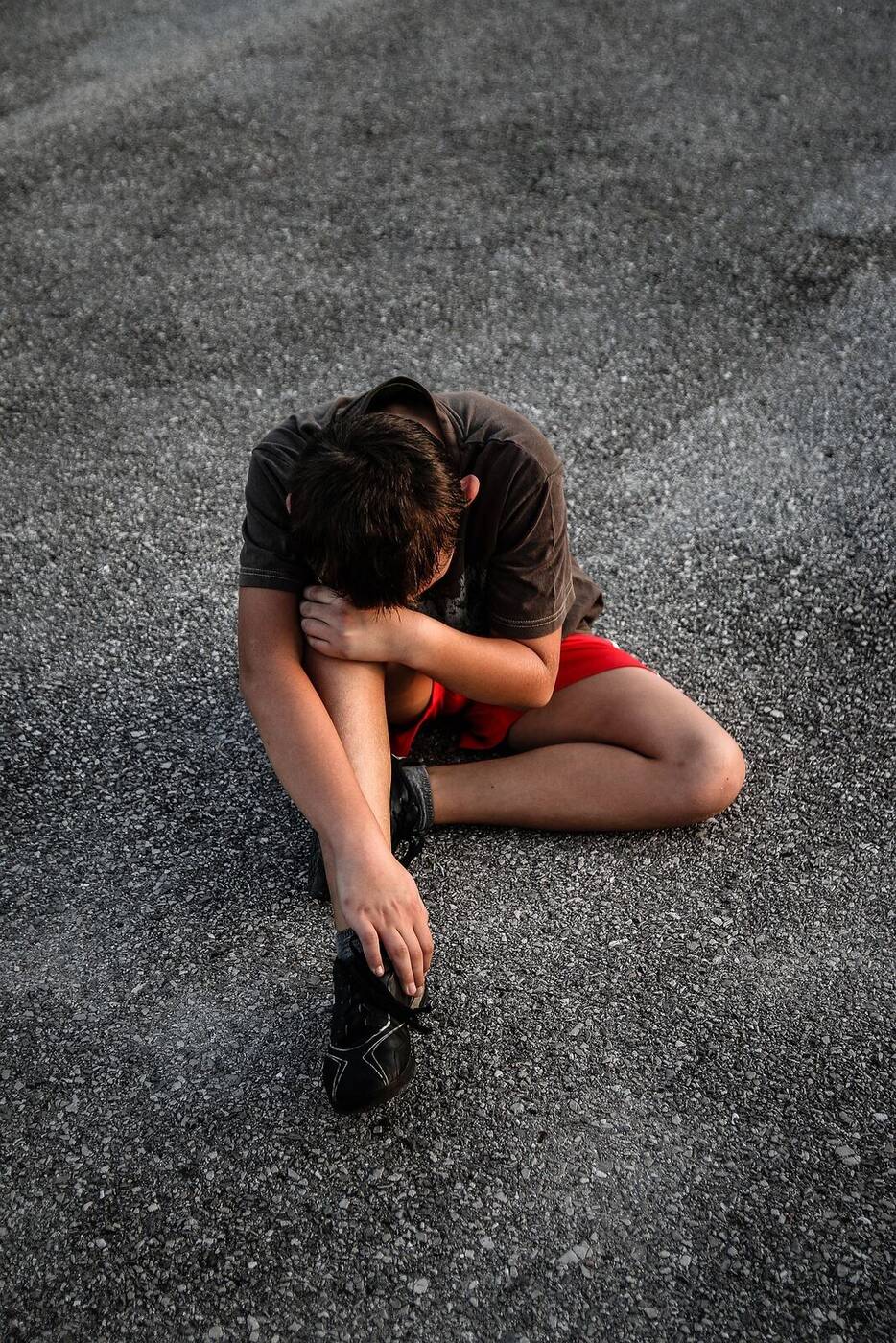
There is a conversation that happens in many families — not out loud, but through patterns. Through the way a father flinches at raised voices. Through a mother's inability to say "I love you" even when she clearly does. Through the anxiety a child carries into adulthood without ever being told why. This is generational trauma at work: invisible, inherited, and deeply human.
Generational trauma — also called intergenerational or transgenerational trauma — refers to the psychological and emotional wounds that are passed from one generation to the next. It is not mythology. It is not an excuse. It is a documented, researched, and deeply impactful psychological reality that shapes families across cultures, continents, and centuries. And the good news, which is just as real, is that cycles can be broken — not perfectly, not all at once, not without pain, but broken all the same.
"The child absorbs the unfinished emotional business of the parent. What a parent cannot bear to feel, the child is left to carry."
— Dr. Mark Wolynn, It Didn't Start With YouWhat Exactly Is Generational Trauma?
To understand generational trauma, we must first understand trauma itself. Trauma is not simply "a bad experience." It is what happens inside a person when an experience overwhelms their ability to cope — leaving behind unprocessed pain, altered beliefs about safety, and a nervous system that remains on high alert long after the danger has passed.
When that trauma is never properly processed — when there is no space to grieve, no language to name the pain, no support to heal — it does not simply fade. It seeps into how a person parents, communicates, loves, and reacts. And children, who are extraordinarily attuned to their caregivers, absorb those patterns, fears, and emotional responses as their own baseline reality — which is why family mental health matters so deeply.
Researchers have found evidence of this transmission happening through multiple pathways: behavioral modeling, attachment disruption, altered stress-response systems, and even — compellingly — at the epigenetic level, where trauma appears to leave biological markers on DNA that can be inherited.
How Generational Trauma Is Passed Down
- Behavioral modeling: Children learn emotional regulation (or the lack of it) by watching their parents.
- Attachment patterns: A parent who was never securely attached often struggles to provide secure attachment to their own child.
- Emotional silence: When pain is never named or discussed, children learn that certain feelings are unsafe to have.
- Hypervigilance: A traumatized parent may unconsciously raise a child who is always waiting for something to go wrong.
- Epigenetics: Emerging research suggests trauma can alter gene expression in ways that affect stress responses in descendants.
Recognizing It in Your Own Family
Generational trauma rarely announces itself. It wears the costume of "that's just how our family is." It presents as personality traits, family rules, or cultural norms. The difficulty is that when you have only ever known one way of being, it is nearly impossible to see it as anything other than normal.
Some of the most common signs that generational trauma may be at play in your family include persistent anxiety without an obvious source, difficulty expressing or tolerating emotions, patterns of addiction or emotional unavailability across generations, an unspoken rule that vulnerability is weakness, chronic people-pleasing or fear of conflict, and a family history of significant trauma — war, famine, abuse, displacement, or systemic oppression — that was never openly discussed or mourned.
What the Research Tells Us
Some of the most compelling early research on generational trauma came from studies of Holocaust survivors and their children. Researchers found that the children of survivors — who had not themselves experienced the Holocaust — showed elevated stress hormones, higher rates of PTSD, and altered cortisol levels consistent with those who had experienced trauma firsthand.
Similar patterns have been documented in the descendants of enslaved people, in families who survived famines, in communities shaped by war and forced migration, and in families with histories of domestic violence or childhood abuse. The specifics differ, but the mechanism is consistent: unprocessed trauma reshapes the internal world of the person who carries it, and that reshaped world becomes the emotional environment in which the next generation grows up.
"Trauma is not what happens to you. Trauma is what happens inside you as a result of what happens to you."
— Dr. Gabor Maté
Watch: Breaking the Cycle of Generational Trauma — Candice Jones, TEDxLSSC
Breaking the Cycle — A Complete 6-Step Guide
The fact that trauma can be transmitted across generations does not mean it is permanent or inevitable. The same research that documents the transmission of trauma also documents something equally powerful: the transmission of healing. When one person in a family line does the work of understanding and processing their trauma, the effects ripple forward — and sometimes backward, reshaping relationships with parents and siblings as well as with children. Here is what that work actually looks like, step by step.
See it clearly, without blame
Breaking a cycle requires first seeing it clearly. This means looking honestly at the patterns in your family — the ways pain was expressed or suppressed, the messages you received about your worth, the emotional environments you grew up in — without immediately assigning blame. Your parents were also children once, shaped by their own families. Understanding this does not excuse harm but it does create space for genuine healing rather than simply reacting against what came before.
Name the pattern specifically
It is not sufficient to simply know that "my family had issues." What specifically are the patterns you are trying to break? Emotional unavailability? Explosive anger? Parentification — being made to carry adult emotional responsibilities as a child? Conditional love? Financial secrecy? The more specifically you can name the pattern, the more precisely you can work to interrupt it.
Get professional support
Reading about generational trauma is valuable. Talking to a therapist — particularly one trained in trauma-informed approaches like EMDR, somatic therapy or Internal Family Systems — is transformative. Generational trauma is stored not just in our thoughts but in our bodies, our nervous systems, our automatic reactions. These layers often require professional support to reach and release.
Practice emotional honesty with your children
One of the most powerful things you can do to break a generational cycle is to let your children see that feelings are safe. Name your emotions. Say "I am feeling frustrated right now — not at you, but about something at work." Apologise when you get things wrong. Show them that adults can feel difficult things and remain safe. This alone can rewrite the emotional inheritance of an entire family line.
Set boundaries with love
This is often the hardest part, because the people perpetuating the patterns are often people you love — parents, siblings, extended family. Setting boundaries within family systems requires both courage and compassion, and shares much in common with the boundary-setting needed to leave any relationship pattern that keeps causing harm. The goal is not to punish or to cut off but to refuse to allow the cycle to continue through you.
Grieve what you did not receive
Many people who do this work eventually arrive at grief — for the childhood they deserved but did not have, for the parent they needed but were not given, for the version of themselves that might have existed in different circumstances. This grief is not weakness. It is the honest acknowledgement of a real loss. And moving through it, rather than around it, is how genuine healing happens.
Signs the cycle is beginning to break:
- You catch yourself before reacting the way you were raised to react
- You can feel your emotions without being overwhelmed by them
- You can disagree with family members without the conversation becoming catastrophic
- You find yourself parenting differently — more consciously — than you were parented
- Your children feel safe to tell you difficult things
A Word on Self-Compassion
One of the most painful aspects of recognizing generational trauma is the guilt that often follows — the fear that you have already passed something harmful to your own children, or that you are somehow to blame for patterns you didn't consciously choose.
Here is what is true: you cannot give what you were never given. You cannot model emotional regulation that was never modeled for you. You cannot break cycles you cannot yet see. And the fact that you are reading this — that you are curious, willing, and asking questions — means you are already doing something your ancestors may never have had the chance to do.
Healing is not about being perfect. It is about being honest, willing, and kind — to yourself first, and then to the people who come after you. Breaking generational trauma is not a single decision. It is a thousand small decisions made over years — to feel instead of suppress, to speak instead of silence, to repair instead of abandon. Every one of those decisions matters. Every one changes what gets passed on.
⚠️ When to Seek Professional Help
If you are experiencing persistent anxiety, depression, flashbacks, emotional numbness, or relationship difficulties that feel connected to your family history, please consider speaking with a qualified mental health professional. Generational trauma can be deep work, and you deserve proper support — not just articles. MANI Nigeria: 08111909909 · She Writes Woman: 0800-800-2000, or explore our guide to finding mental health support in Nigeria.
The Cycle Ends With You — If You Choose It
The story of your family does not have to be the story of your future. Healing is possible. It is happening in families all over the world, one brave conversation, one broken pattern, at a time.
Explore Family & Mental Health →