OCD: Symptoms, Causes and Treatment
Far more than liking things neat. A real, often debilitating cycle of intrusive thoughts and compulsions — and one that responds well to treatment.

There's a common misconception that if you like to meticulously organize your things, keep your hands clean, or plan out your weekend to the last detail, you might be "a bit OCD." In fact, Obsessive-Compulsive Disorder is a serious, frequently misunderstood psychiatric condition — one that has little to do with tidiness, and everything to do with a distressing cycle of intrusive thoughts and the compulsive behaviours used to relieve them.
OCD affects roughly 1-2% of people worldwide, and it can be genuinely debilitating — people affected often have little or no control over their obsessive thoughts and compulsive behaviours, which can consume hours a day and interfere significantly with work, school, and relationships.
"OCD has two aspects: the intrusive thoughts, images, or impulses, known as obsessions, and the behavioural compulsions people engage in to relieve the anxiety the obsessions cause."
What OCD Actually Is
OCD has two core components. Obsessions are recurring, intrusive thoughts, images, or urges that cause significant anxiety or distress — and critically, they are unwanted. People with OCD don't want these thoughts and often find them disturbing or contrary to their own values, which is part of what makes the condition so distressing. Compulsions are the repetitive behaviours or mental acts performed to reduce the anxiety the obsessions create, or to prevent some feared outcome.
🔬 Why compulsions don't actually help, long-term
Performing a compulsion provides brief relief, which is exactly why the cycle continues — the brain learns that the compulsion "worked." But the relief is temporary, and over time, compulsions have to be repeated more often or more elaborately to achieve the same effect, while the underlying anxiety and obsessions remain untreated.
Common Obsessions and Compulsions
Obsessions and compulsions can take many different forms — contrary to popular portrayal, hand-washing is only one of many possible presentations.
Common obsession themes:
- Contamination and fear of germs or illness
- Fear of causing harm to oneself or others, even accidentally
- A need for symmetry, order, or exactness
- Unwanted taboo or intrusive thoughts, including about violence, sexuality, or religion
- Excessive doubt and need for certainty ("Did I lock the door?")
Common compulsions:
- Excessive cleaning or hand-washing
- Repeated checking (locks, appliances, that no harm was caused)
- Counting, repeating actions, or arranging objects until they feel "right"
- Mental rituals — silently repeating phrases or reviewing events to seek reassurance
- Seeking reassurance repeatedly from others
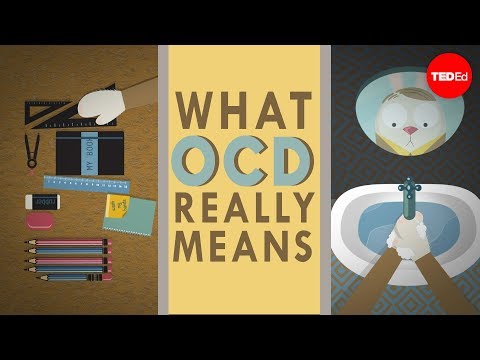
Watch: Debunking the Myths of OCD — Natascha M. Santos, TED-Ed
What Causes OCD?
OCD is considered a neurobiological disorder — research suggests the brains of people with OCD are wired to behave in specific ways, with differences identified in circuits connecting the frontal cortex to deeper brain structures involved in decision-making and habitual behaviour. Genetics play a real role, and stressful or traumatic life events can trigger onset or worsen symptoms in people already predisposed to the condition, a pattern related to what we've written about regarding how chronic stress shapes anxiety disorders more broadly.
Common Myths About OCD
Myth vs. reality:
- Myth: "OCD just means being very neat and organized." Reality: liking order is a preference. OCD is a distressing, unwanted cycle that the person has little control over and often actively wishes would stop.
- Myth: "Everyone with OCD washes their hands constantly." Reality: obsessions and compulsions vary enormously, and many people with OCD have no visible cleaning-related symptoms at all.
- Myth: "You can just stop if you try hard enough." Reality: OCD involves genuine neurological patterns, not a lack of willpower — which is exactly why targeted treatment is so effective where sheer effort alone is not.
OCD Is Treatable
Exposure and Response Prevention (ERP)
ERP, a specific form of CBT, is the gold-standard treatment for OCD. It involves gradually and safely exposing someone to the source of their obsession while helping them resist the compulsion — retraining the brain to tolerate the anxiety without needing the ritual to relieve it.
Medication
SSRIs, often at higher doses than used for depression, are well-evidenced for treating OCD and are frequently combined with ERP for the strongest results — the same class of medication often used to manage the physiological side of anxiety more broadly.
⚠️ If OCD is significantly disrupting your life
Please reach out to a mental health professional experienced in treating OCD specifically. MANI Nigeria: 08111909909 · She Writes Woman: 0800-800-2000. This is a highly treatable condition, and specialised support makes a real difference.
When to Seek Professional Help
If obsessions and compulsions are consuming an hour or more of your day, causing significant distress, or interfering with work, relationships, or daily functioning, it's worth seeking an evaluation from a therapist experienced in OCD specifically, since general therapy approaches aren't always as effective as ERP for this particular condition. Consistent sleep and daily routine also genuinely support recovery alongside professional treatment.
The Thoughts Are Not the Problem. The Cycle Is — And It Can Break.
Having intrusive, unwanted thoughts does not make you dangerous or broken. OCD is a treatable neurological pattern, not a reflection of who you are, and effective treatment exists.
Explore Wellness & Self-Care →