Imposter Syndrome: Why High Achievers Feel Like Frauds
You're not behind on believing in yourself. You're carrying a very common, very human weight — and there are real ways to put it down.

You got the promotion. You should feel proud. Instead, there's a small, cold voice somewhere behind your ribs that's already rehearsing the sentence: "They're going to figure out I don't actually know what I'm doing." Maybe you got the acceptance letter, the client, the award, the invitation to speak — and within minutes, before the congratulations even finished landing, your mind was already building the case that it was luck, timing, or a mistake in the paperwork. Anyone but you deserved it.
If this sounds painfully familiar, you are not broken, and you are certainly not alone. This experience has a name — imposter syndrome — and it has a curious, almost cruel signature: it doesn't show up because you're failing. It shows up because you're succeeding, and some part of you simply refuses to believe the evidence.
"The women who received doctorates, who achieved great distinction in their fields... had this deep sense that they had fooled everybody. That any day now, they would be found out."
What Imposter Syndrome Actually Is
The term was coined in 1978 by psychologists Pauline Clance and Suzanne Imes, who noticed something striking while studying high-achieving women: despite genuine, well-documented success — advanced degrees, professional recognition, glowing performance reviews — many of them privately believed they were frauds. Not modest. Not humble. Genuinely, quietly convinced that their accomplishments were the result of luck, charm, or having fooled everyone around them, and that exposure was only a matter of time.
What made their research so important is what it ruled out. These weren't underqualified people with accurate self-assessments. They were, by every external measure, excellent at what they did. The gap wasn't between their ability and the job — it was between their ability and their own internal experience of that ability.
That gap is imposter syndrome, and later research confirmed it isn't limited to women, or to academia. It shows up in doctors, engineers, teachers, entrepreneurs, new parents managing a demanding job, and — often most intensely — in people who are the first in their family or community to reach a particular room: the first to go to university, the first in a leadership position, the first from their background at a certain company.
The Cruel Irony: Why Competence Doesn't Cure It
Here is the part that trips almost everyone up: you cannot simply achieve your way out of imposter syndrome. Many people assume that once they get the next promotion, publish the next paper, or hit some invisible threshold of success, the feeling of fraudulence will finally lift. It usually doesn't. If anything, each new achievement raises the stakes — now there's more to lose, a bigger reputation that could unravel, a bigger fall from a bigger shelf.
Psychologists have a useful, slightly humbling explanation for part of this: genuinely skilled people tend to be more aware of how much they don't know. The more you learn about a subject, the more clearly you can see its edges, its complexity, and everything you still haven't mastered — while people with less genuine skill are often less aware of the gaps in their own knowledge, and therefore feel comparatively more confident.
In other words, a certain amount of self-doubt is actually a marker of expertise, not a lack of it. That reframe alone helps some people, though it rarely fully resolves the feeling on its own.
There's also a timing problem baked into how careers actually work. Confidence tends to lag behind competence — you become genuinely good at something before your internal sense of being good at it catches up. That gap can last months, sometimes years, and during that entire stretch, a perfectly capable person can walk around feeling like a fraud simply because their self-perception hasn't finished updating to match reality yet.
A particular version: starting something new
Imposter syndrome often intensifies sharply around any new beginning — a new job, a new business, a new field entirely. There is no track record yet to point to, no accumulated proof file, nothing but the decision itself and the uncertainty of whether it will work.
Founders and career-changers frequently describe this exact period as the most acute imposter syndrome of their working lives, precisely because the usual evidence — years of results, a familiar title, established relationships — hasn't had time to build up yet. If you are in that exact position right now, it is worth knowing this is an expected, almost universal phase of starting something new, not a sign that you've made a mistake.
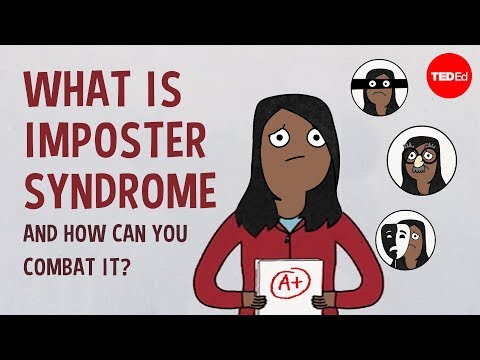
Watch: What Is Imposter Syndrome and How Can You Combat It? — Elizabeth Cox, TED-Ed
The Five Hidden Faces of Imposter Syndrome
Imposter syndrome doesn't always look like obvious insecurity. Sometimes it's disguised as perfectionism, overwork, or an aversion to asking for help — patterns that can even look like strengths from the outside. Researcher Dr. Valerie Young identified several distinct "competence types," each with its own quiet internal rulebook for what counts as "good enough."
The Perfectionist
Sets impossibly high standards for themselves, and experiences even a 98% success rate as a failure because of the missing 2%. Praise rarely lands, because it's always measured against the one thing that could have been better.
The Superhuman
Believes they must excel in every single role at once — the ideal employee, parent, partner, friend — and measures their worth by how much they can juggle without visibly struggling. Rest feels like an admission of inadequacy.
The Natural Genius
Judges competence by how easily and quickly something comes, not by effort or growth. If they have to work hard or ask questions to understand something, they interpret that struggle as proof they're not actually talented.
The Soloist
Believes that needing help is itself evidence of fraudulence, so they avoid asking for support even when it would make their work better and their life easier — and quietly resent how much harder everything is as a result.
The Expert
Feels like a fraud until they've mastered every single detail of a subject, and avoids applying for opportunities or speaking up in meetings unless they feel 100% qualified — a bar that, by definition, almost nobody ever fully clears.
Most people recognise a bit of themselves in two or three of these, not just one. That's normal — these are overlapping tendencies, not rigid boxes, and naming which ones feel familiar is often the first moment the pattern starts to loosen its grip even slightly.
Why It's Not Just a Personal Quirk — Context Makes It Worse
It would be incomplete to talk about imposter syndrome as though it lives entirely inside one person's head, disconnected from the world around them. Certain environments and social realities make it dramatically more likely, and more intense.
What amplifies imposter syndrome:
- Being "the first" or "the only": the first in your family to attend university, the only woman or the only person of a certain background in the room — genuine underrepresentation makes self-doubt louder, not because you belong less, but because there are fewer visible examples that look like you succeeding
- Toxic or highly competitive workplace cultures: environments that reward constant self-promotion can make quieter, more reflective people feel like frauds simply for not performing confidence loudly
- Comparison culture and social media: seeing curated highlight reels of other people's careers invites an unfair comparison between your behind-the-scenes reality and everyone else's polished front stage
- A history of conditional praise: growing up where love or approval felt tied tightly to achievement can wire a person to feel that their worth is only ever as good as their last success
- Career transitions: a new job, a promotion, a return to work after time away — any period where your skills genuinely are still developing can trigger a legitimate learning curve that gets mislabeled as fraudulence
Recognising these external contributors matters, because it shifts the framing away from "something is wrong with me" and toward "this is a very human response to a specific set of pressures" — a much more workable place to start from, and one that connects closely to the same always-on, never-enough workplace culture that drives burnout.
Imposter Syndrome and Cultural Expectations
In many Nigerian and African professional settings, imposter syndrome carries an extra, culturally specific layer that Western research on the topic often misses entirely. Being the first in your family to hold a certain job title, the first to work in a particular industry, or the first to move into management in a company where people who look like you have historically stayed junior — these aren't abstract diversity statistics. They're lived, daily experiences that quietly whisper "you don't quite belong here yet," regardless of how qualified you actually are.
There's also a specific version of this that shows up around education and credentials. Someone who studied a "non-traditional" path, changed careers later than expected, or built skills outside a formal classroom setting often carries a persistent sense that their success is somehow less legitimate than someone who followed the conventional route — even when the actual output, the actual results, are identical or better.
None of this is a personal failing. It's the predictable result of operating in spaces that were not originally built with you in mind, and naming that clearly tends to loosen its grip more effectively than simply trying to "think more positively."
How It Shows Up in Daily Life
Imposter syndrome rarely announces itself directly. It usually shows up sideways, through behaviour rather than through a clear internal statement like "I feel like a fraud."
Overworking to "earn" your place
Staying late, over-preparing for meetings that don't need it, taking on more than your role requires — all in an unconscious effort to build a buffer against being exposed. This overworking pattern is one of the clearest overlaps between workplace anxiety and imposter syndrome; they frequently travel together.
Discounting praise, amplifying criticism
Compliments get explained away ("they're just being nice," "anyone could have done that") while a single piece of critical feedback gets replayed for days as proof of your inadequacy. The evidence gets filtered to fit the fear, not the other way around.
Chronic over-preparation and procrastination
Two opposite-looking behaviours with the same root: over-preparing to avoid ever being caught unqualified, or procrastinating to have a built-in excuse ("I didn't have time" feels safer than "I tried my best and it wasn't good enough").
Staying quiet in rooms where you actually belong
Holding back a genuinely good idea in a meeting because of a nagging sense that someone else is more qualified to say it — even when you were invited to that room specifically for your perspective.
Downplaying your role in your own success
Describing a genuine achievement with phrases like "I just got lucky" or "the team really carried that one" even when your specific contribution was central to the outcome. This isn't humility — genuine humility can acknowledge a team's help while still owning your part. This is a reflexive erasure of your own role, every single time.
Evidence-Based Ways to Work Through It
None of the following will make imposter syndrome disappear overnight, and that's an honest thing to say rather than a disappointing one — this is a deep-rooted pattern, not a light switch. But each of these has real support behind it, and each one chips away at the pattern a little more with consistent practice.
Separate feelings from facts
Feeling like a fraud is not the same as being one. When the thought arrives — "I don't deserve this" — try treating it as data about your emotional state in that moment, not as an accurate report on your actual competence. The feeling is real. It is not, however, reliable evidence.
Keep a "proof" file
Many people who work through imposter syndrome successfully keep a running, physical or digital record of positive feedback, completed projects, and moments they handled well. When the self-doubt gets loud, this becomes a factual counterweight you can return to — something outside your current emotional state that you can actually check against.
Talk about it, specifically to people you respect
One of the most consistently reported relief points in imposter syndrome research is simply discovering that people you admire feel it too. This isn't about a vague reassurance that "everyone feels this way" — it's the specific, concrete experience of hearing someone whose competence you respect describe the exact same internal experience you've been hiding.
Redefine what "earning it" means
You don't have to feel 100% ready to be genuinely capable. Waiting for the feeling of deserving something before acting on it means many capable people never apply, never speak up, never take the opportunity — while less qualified but louder people move forward without waiting for permission from their own nervous system.
Notice the cost of constant over-functioning
If imposter syndrome is driving you to consistently overwork, this is worth taking seriously as a genuine risk to your wellbeing, not just a personality quirk. Left unaddressed, this exact pattern is one of the more common paths into full workplace burnout.
Build a mentor relationship, not just a support network
A trusted mentor — someone slightly further along the path you're on — can offer something a general support network often can't: a specific, credible outside perspective on whether your self-assessment is actually accurate. Many people underestimate how much a single honest conversation with the right person can recalibrate months of private self-doubt.
Give yourself permission to be a beginner at new things
Every promotion, every new role, every unfamiliar challenge comes with a genuine learning curve — and a learning curve is not the same thing as being unqualified. Confusing the two is one of the most common ways imposter syndrome quietly convinces capable people that normal, expected growing pains are evidence of fraudulence.
Quick-start toolkit:
- Name which of the five "types" feels most familiar to you — naming it starts to loosen it
- Start a simple proof file of concrete wins and positive feedback, even a basic notes app list
- Tell one trusted colleague or mentor how you actually feel — specificity matters more than volume
- Notice when you're over-preparing or overworking to "earn" your place, and question whether it's necessary
- Remember: the discomfort of not feeling 100% ready is not the same as not being capable
When It Becomes Something More
For most people, imposter syndrome is an uncomfortable but manageable pattern of thought. For some, especially when combined with chronic overworking, perfectionism, or a toxic environment, it can tip into genuine workplace anxiety and burnout — persistent dread, physical symptoms of stress, difficulty sleeping, or a sense of hopelessness that goes beyond situational self-doubt. If that describes what you're experiencing, this is worth bringing to a therapist or counsellor directly, rather than trying to manage it alone through willpower and better habits.
You Were Never the Only One Who Felt This Way
The fact that you doubt yourself is not proof that you don't belong. It is proof that you take what you do seriously enough to fear getting it wrong — which, quietly, is often exactly the kind of person worth trusting with the work in the first place.
Explore Work & Burnout →